Bath Textiles · Fiber & Care
Types of Cotton Towels: How Fiber and Weave Shape Bath Towel Performance
A towel’s feel is the result of several decisions made long before it reaches the bathroom: which cotton fibers are spun into yarn, how those yarns are built, and how the fabric is woven. Together, these details influence softness, absorbency, durability, and drying time.
Published October 9, 2026
Cotton is often described as if it were one uniform material. In a towel, however, “cotton” is only the beginning of the story. Fibers differ in length and fineness; yarns can be twisted, combed, or left relatively open; and the fabric itself may be made as looped terry or a flatter weave. Each choice changes how the finished towel meets water, skin, and air.
That is why two cotton bath towels can feel strikingly different even when both are absorbent and well made. One may have a smooth, substantial surface and a slow, comforting dry. Another may feel lighter, release moisture quickly, and take up less space on a crowded laundry line. Understanding the construction behind those differences makes labels easier to interpret—and helps match a towel to the rhythm of its use.
Start with the fiber: what cotton length means
Cotton grows as a soft fiber around the seeds of the cotton plant. After harvest, those fibers are separated, cleaned, and spun into yarn. Their length—often called staple length—is one of the features that can affect the smoothness and strength of that yarn.
Longer fibers can be spun into yarn with fewer exposed ends. Fewer ends generally mean a smoother surface and less tendency for loose fibers to escape as lint. Long-staple cotton is therefore commonly associated with a refined hand and yarns that can withstand repeated handling. It is not a guarantee of a perfect towel: spinning, weaving, finishing, and care all matter. But fiber length gives useful context when comparing cotton towels.
Extra-long-staple cotton is a more specific description for particularly long fibers. Labels may also name a growing region or cotton variety. Such terms can describe the source of the fiber, but they should be read alongside the towel’s construction and care details. A place name by itself does not tell you how dense the pile is, how quickly the towel dries, or how well its seams will hold up.
Shorter cotton fibers can still make serviceable towels. Their yarns may have more fiber ends at the surface, which can contribute to a less smooth feel or more initial lint. The final result depends on yarn preparation and fabric design, not fiber length alone. A thoughtfully made towel from ordinary cotton may perform better in a particular household than a heavier towel made with a more prestigious fiber.
Combed, ring-spun, and open yarns
Before cotton becomes fabric, it is prepared and spun. Combing is a process that removes many shorter fibers and aligns the remaining fibers more evenly. Combed cotton yarns can produce a smoother, more consistent fabric surface. This finish may be noticeable in a towel that feels less fuzzy against the hand, though the towel’s loops and overall weight still shape its character.
Ring spinning is one way to form yarn by drawing out and twisting fibers together. Depending on the yarn and the textile design, this can produce a strong, even thread. Other spinning methods create different yarn structures and surface qualities. Product labels do not always identify the spinning method, so its absence is not necessarily a warning; it is simply one part of a larger construction picture.
Some towels use yarns designed to keep cotton fibers relatively open, often described with terms such as “zero twist.” The intention is to create a lofty, airy feel. A more open yarn can contribute to a soft hand and accessible absorbency, but it also needs sound construction and appropriate care. Claims about yarn technology are most useful when considered alongside information about fiber content, towel weight, and washing instructions.
Terry towel weave: the loops that do the work
The familiar bath towel is usually made from terry cloth. Its surface is covered with small loops, which increase the area available to meet water. When a towel touches wet skin, those loops help draw moisture into the fabric. Loop height, density, and stability all contribute to the way the towel feels and performs.
Longer or more open loops may feel soft and cushiony, but loops can snag if pulled by jewelry, hooks, or rough edges. Dense, compact loops can create a substantial surface, although the towel may take longer to dry if it holds a great deal of water. There is no single loop structure that suits every situation. A plush towel may be welcome after a long bath; a lighter construction may be easier to rotate through frequent washes.
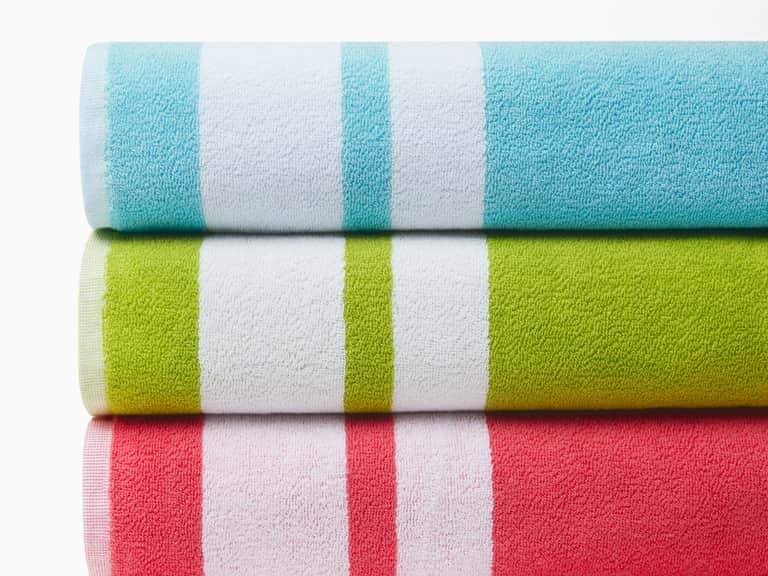
Not every cotton towel is terry. Flat-woven towels have a smoother surface and often weigh less than thick looped towels. A fouta-style towel, for example, may be designed for travel, a spa wrap, or use at the beach. The Belgian Towel Fouta in Beeswax stripe is described as a versatile textile for beach, spa, and travel use. Its flatter, adaptable format illustrates how a towel can prioritize portability and easy handling rather than a deep terry pile. Learn more about its construction in the fouta towel details.
GSM and the question of towel weight
Towel weight is often expressed as GSM: grams per square meter. It measures the mass of the fabric over a defined area. In broad terms, a higher GSM towel is usually denser or more substantial than a lower GSM towel of similar construction. That can correspond to a plush hand and a feeling of greater coverage, but GSM is not a direct measurement of quality or absorbency.
A high-GSM towel contains more material in each square meter, and that extra material can take longer to dry after use or laundering. A lighter towel may be easier to pack and quicker to air-dry, though it may not feel as enveloping. Fiber, loop design, finishing, room ventilation, and how thoroughly a towel is spun in the washer all affect its real-world drying time.
Consider the intended routine. A towel used in a well-ventilated bathroom with space to hang may tolerate a fuller pile. In a humid room or a busy household where towels are washed and reused often, a lighter construction may be easier to manage. Neither choice is inherently superior; the useful question is whether the balance of weight, comfort, and drying time fits the conditions.
For a concrete reference point, the Cloud Loom Organic Towels are described as long-staple organic cotton with a 685 GSM construction. That specification suggests a substantial towel, but actual experience also depends on its loop structure, dimensions, bathroom airflow, and care routine. GSM is best used as one clue, not as a verdict.
Common cotton towel types, compared
Marketing names can make the cotton landscape seem more complicated than it is. The following descriptions are useful starting points, but the details on an individual towel should always be checked. Labels may refer to fiber origin, preparation, or a particular product category rather than a standardized performance grade.
- Long-staple cotton: Longer fibers can form smooth, strong yarns and are often chosen for towels intended to feel soft and substantial. The finished result still depends on spinning, weaving, and finishing.
- Extra-long-staple cotton: A term for cotton with particularly long fibers. It may support a smooth hand and durable yarn, but it does not automatically mean a towel will absorb more or dry faster.
- Combed cotton: Cotton that has been mechanically prepared to remove many shorter fibers and align the remaining ones. It is often associated with a cleaner, more even surface.
- Organic cotton: A description of how cotton is grown and processed under the requirements of a named certification or standard. Organic status does not, by itself, specify pile height, GSM, or drying speed.
- Garment-dyed cotton: Cotton fabric or a finished textile that is dyed after construction. The process can create subtle variations in color. Dyeing describes a finishing choice, not a fiber length or weave.
- Turkish or Egyptian cotton: Geographic and commercial terms associated with cotton sources and textile traditions. Their meaning on a label should be interpreted with the product’s stated fiber composition and construction rather than treated as a guarantee of a particular performance.
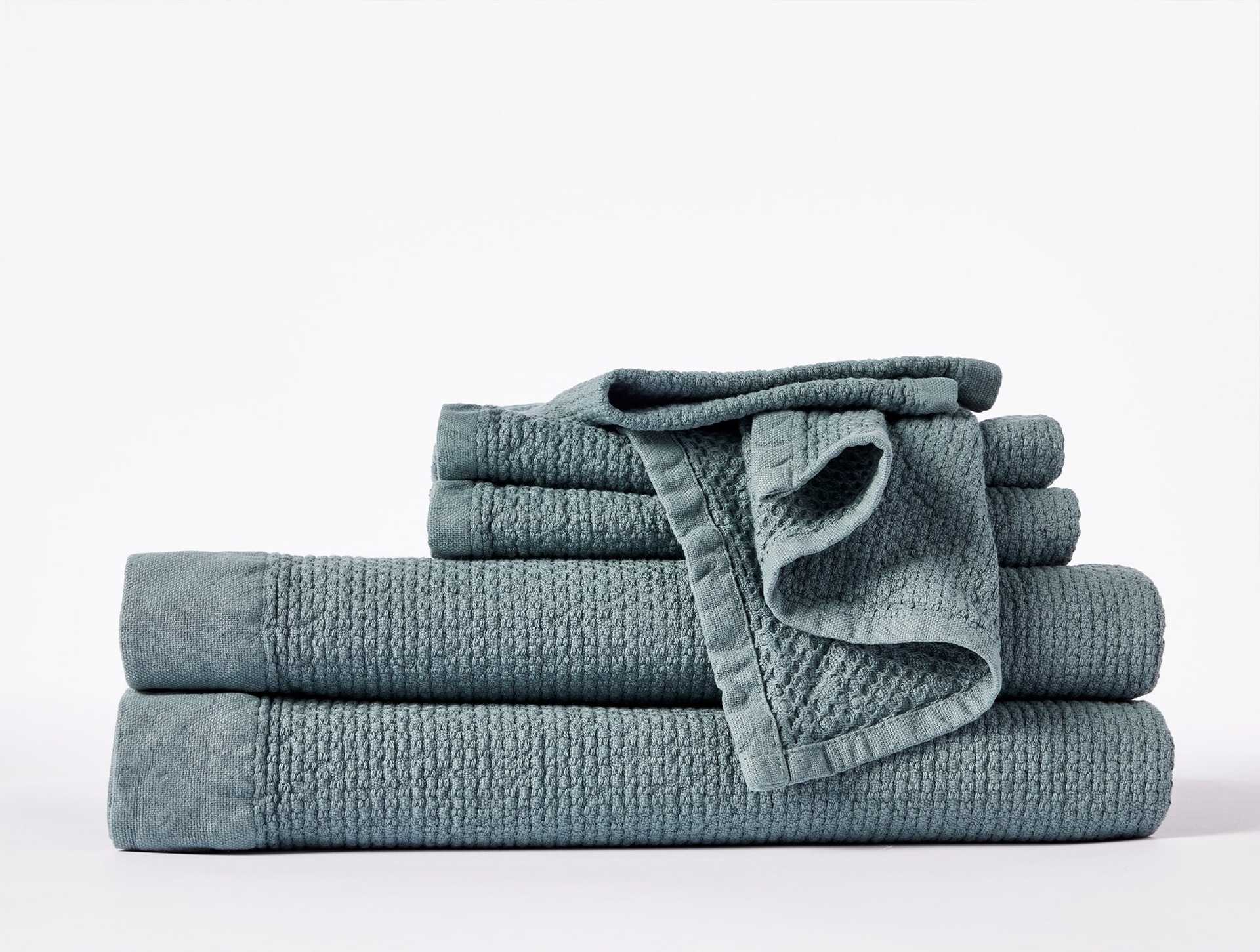
The Adriatic Organic Towels provide an example of a different balance: they are described as 100 percent organic cotton in a lightweight, textural weave, with a quick-drying design intention. That makes the collection useful for considering how a towel can emphasize a lighter hand and easier drying rather than maximum pile. Such descriptions are not a promise that every towel will dry at the same rate in every home; ventilation and use matter, too.
Absorbency is more than softness
Softness and absorbency are related to the feel of a towel but are not the same property. A towel can feel plush without being especially effective at taking up water. Conversely, a lighter towel may absorb comfortably even if it lacks the cloudlike surface associated with deep terry.
Absorbency depends on the fiber’s ability to take in moisture, the amount and structure of the fabric, and any finishes left on it. New towels may carry residues from manufacturing or finishing, and fabric softener can leave a coating that reduces the fabric’s ability to take up water. For this reason, many care instructions advise washing towels without fabric softener. Follow the specific label, since dye, fiber blends, and finishes may require different treatment.
Loops create more surface area, while a denser construction may provide more fabric to hold moisture. But a thick towel can also become heavy when wet and require more time to dry. The most useful definition of towel performance is therefore not “maximum absorbency” in isolation. It is how effectively the towel absorbs during use and then dries in the conditions where it lives.
Durability lives in the details
Cotton fiber contributes to durability, but the towel’s edges and seams deserve attention as well. Reinforced hems can help resist the strain of repeated washing and pulling. Well-secured loops are less likely to unravel, while careful dyeing and finishing can help preserve a towel’s appearance. These details are easy to overlook when comparing towels by softness alone.
How a towel is treated matters just as much. Overloading a washing machine can prevent towels from moving freely through the wash and rinse. Excess detergent may remain in the fabric; bleach can damage fibers or color unless the care instructions permit it. High dryer heat may speed a cycle but can be harsh over time. A gentle routine, with enough room for towels to circulate and a thorough dry before storage, can help maintain their texture and reduce mustiness.
Care instructions are specific to each textile. Some towels call for a cold, gentle wash and low tumble drying; others allow a warm wash. Sorting dark colors separately can help prevent color transfer. If the label says not to use fabric softener, take that advice seriously: coating the loops may compromise the very water uptake the towel is meant to provide.
How to compare towels without being distracted by labels
When choosing between cotton bath towels, begin with the everyday setting rather than a superlative. A guest bathroom used occasionally may call for a plush towel that feels welcoming. A small bathroom shared by several people may benefit from towels that dry more readily between uses. A gym bag or suitcase often rewards a lighter construction over a deep pile.
Then read the specifications in a consistent order:
- Fiber content: Is the towel 100 percent cotton, organic cotton, or a blend? If a certification is mentioned, identify what it certifies rather than assuming it covers every performance claim.
- Yarn and fiber descriptions: Look for details such as long-staple or combed cotton, while remembering that these describe only part of the construction.
- Weave and surface: Terry loops generally offer a different feel and moisture-handling surface from a flatter weave.
- Weight: Compare GSM when it is available, but consider it alongside drying space and how often the towel will be used.
- Dimensions: Size affects coverage, laundry load, and how much room a towel needs on a rail.
- Care instructions: A towel that requires a routine you cannot maintain may not be a practical fit, even if its fiber description sounds appealing.
Questions readers often ask
Are heavier cotton towels more absorbent?
Not necessarily. A higher GSM indicates greater fabric weight per area, which often means a more substantial towel. Absorbency also depends on fiber, loop construction, finishing, and how the towel is cared for. A thick towel can take longer to dry, so weight should be balanced against the bathroom’s ventilation and the household’s laundry habits.
Does long-staple cotton always last longer?
Longer fibers can make smoother yarns with fewer exposed ends, which may support a refined feel and strength. But durability is also affected by yarn quality, weaving, hems, dyeing, and repeated washing. Fiber length is a meaningful clue, not a guarantee of lifespan.
Why does a new cotton towel leave lint?
Some loose fibers may come away during the first washes, especially from a new, fluffy pile. Washing according to the care label and avoiding an overloaded machine can help. Persistent shedding, broken loops, or fraying may indicate wear or a construction problem, rather than ordinary initial lint.
Is organic cotton automatically softer?
No. Organic describes how the cotton is produced under the requirements of a certification or standard; softness depends on fiber characteristics, yarn preparation, weave, pile, and finishing. Organic cotton can be made into a range of textures, from light and textured to dense and plush.
Reading the towel as a small piece of textile engineering
A cotton towel is a simple object with a surprisingly layered design. Fiber length shapes the yarn’s potential. Spinning brings fibers together. Weaving sets the surface and structure. Loops give terry its familiar texture and help create a broad contact area for water. Weight influences the towel’s hand and the amount of fabric that must dry after use. Finishing and care determine how those qualities change over time.
Seen this way, “best cotton towel” is not a single category. The best choice for a humid bathroom may differ from the best choice for travel, a guest room, or a household that washes towels frequently. A plush long-staple cotton towel and a lightweight organic cotton weave can both be well suited to their intended roles. The difference lies in what they prioritize.
When evaluating types of cotton towels, look beyond a single word on a label. Consider the fiber, the yarn, the weave, the weight, and the care routine as parts of one system. That practical reading turns a familiar bathroom essential into something easier to choose, easier to maintain, and better matched to the daily work it is asked to do.