Kitchen Textiles & Care
From Dish Drying to Spill Cleanup: Understanding Coyuchi Kitchen Towels
A kitchen towel is a small tool with a surprisingly varied itinerary. It may polish a rinsed glass, gather water from a counter, or wait within reach while supper comes together. Its performance depends not only on the fiber, but also on the weave, the job, and the habits that follow each use.
Published October 25, 2026
In a working kitchen, water travels in many forms: a bead clinging to a glass, a thin stream escaping a colander, a splash near the sink. A towel meets each moment differently. One cloth may be expected to leave drinkware clear; another may need to absorb a spill quickly and then dry before it is needed again. That is why understanding Coyuchi kitchen towels—or any kitchen textile—begins with a simple question: what work will the cloth do most often?
Texture, absorbency, lint, dimensions, and care instructions all influence the answer. The word “towel” can describe fabrics with different structures and behaviors, and a soft hand does not automatically mean a towel is ideal for every task. Reading the weave and matching it to a routine can help households use kitchen towels more effectively, reduce unnecessary wear, and keep clean cloths ready for the next round of cooking and cleanup.
One towel, several jobs
Kitchen work rarely stays within neat categories. A cloth used to dry hands might be called into service when a few drops spill beside the sink. A towel set aside for dishes may end up covering a bowl or wiping a clean work surface. This flexibility is useful, but it can also blur the line between tasks that ought to remain separate for hygiene.
It helps to think of kitchen towels in broad roles. A dish-drying towel should absorb water while leaving as little lint as possible on glass, ceramics, and polished cutlery. A spill cloth needs enough surface area and absorbency to collect liquid without spreading it across a counter. A hand towel benefits from frequent replacement and a place to hang where it can dry between uses. A towel used for food preparation should be kept distinct from one that has handled raw ingredients, cleaning chemicals, or a visibly dirty surface.
These are practical distinctions, not rigid rules about fabric. The same cotton cloth may perform more than one role when it is clean and used appropriately. But separating tasks—or changing towels often—makes it easier to maintain a hygienic routine. A towel that has absorbed a spill should not automatically return to drying clean dishes without laundering.
How weave shapes performance
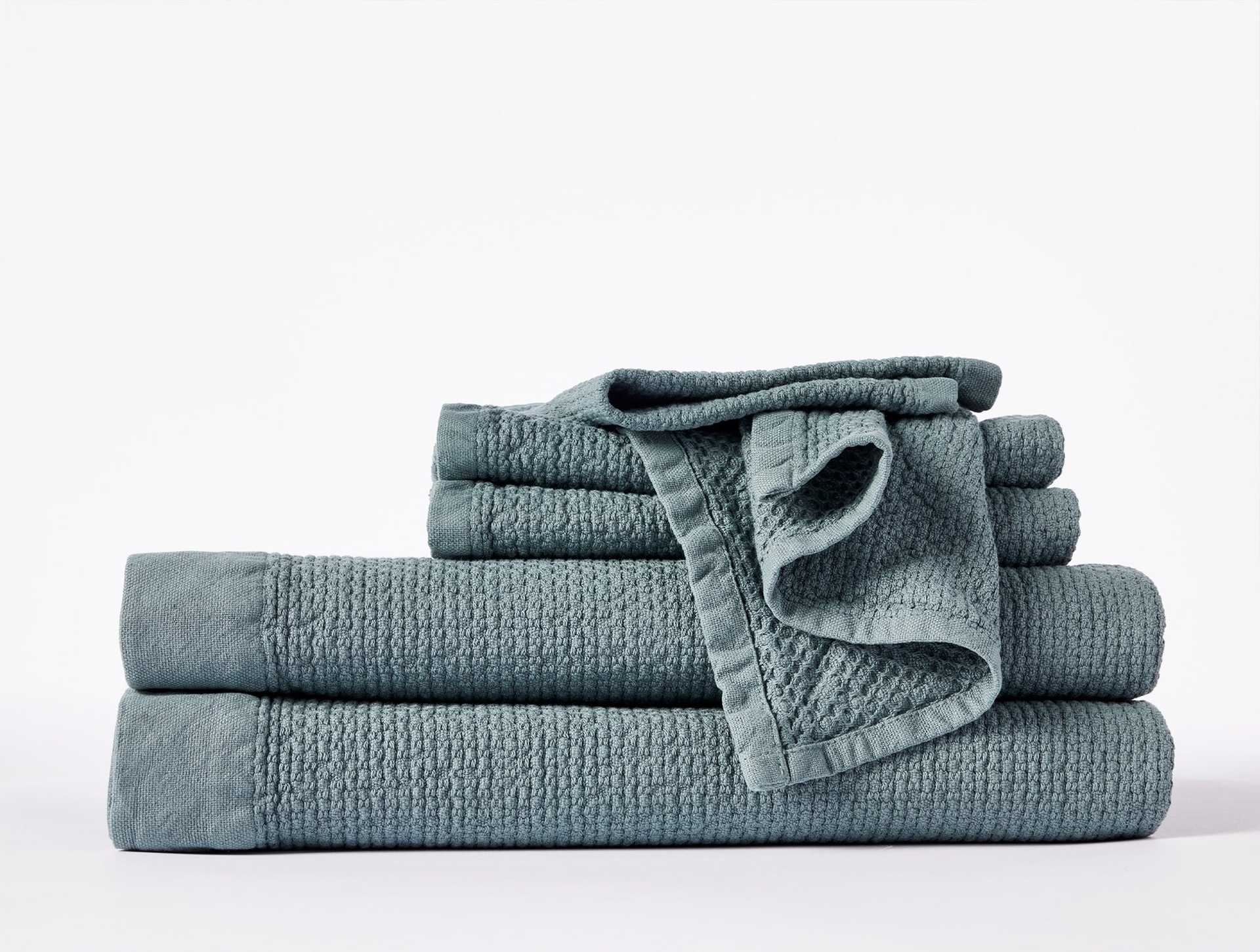
Weave is the arrangement of yarns that forms a fabric. It affects how a towel feels, how much moisture it can hold, how quickly it dries, and whether it leaves fibers behind. A close, flat surface may glide easily over glassware and be less prone to catching on edges. A more textured or looped surface can offer additional spaces for water to enter the fabric, though construction, fiber, and finishing also influence the result.
Kitchen towels often use cotton because it is familiar, washable, and capable of absorbing water. Yet “cotton” alone does not tell the whole story. Yarn thickness, fiber length, density, finishing, and the pattern of the weave all contribute to the finished cloth. A dense towel may feel substantial but take longer to dry. A lighter, more open construction may dry relatively quickly, but it may not hold as much liquid at once. The useful balance depends on the task and the conditions in the kitchen.
Texture also matters when drying dishes. A cloth that feels smooth may be comfortable for polishing, while a pronounced weave can provide a little more grip when wiping a damp surface. Neither quality guarantees a streak-free result: detergent residue, hard-water minerals, and the condition of the glass can matter too. The towel is one part of the process, not a cure for every mark.
Drying dishes and glassware
For dish drying, the aim is to move water from the surface of an item into the towel without leaving lint or transferring soil. Start with a freshly laundered cloth and make sure it is fully dry. A damp towel has less capacity to take up additional water, and a cloth used repeatedly without drying can develop unpleasant odors. Clean hands and a clean drying surface matter as much as the towel itself.
Glasses often show stray fibers more readily than textured plates. If lint is a recurring concern, inspect the towel after laundering and consider whether the fabric is shedding, whether it was washed with lint-producing items, or whether residue from detergent or softener may be affecting the surface. Some new textiles release loose fibers during early washes. Following the care label and washing a new towel before use can help prepare it for routine work.
Rather than rubbing vigorously, support a glass securely and use the towel to blot or gently polish, taking care around thin rims. For plates and bowls, work from the cleanest area toward the less clean edge, and replace a towel that becomes noticeably damp or soiled. In busy kitchens, air-drying dishes on a clean rack may be more practical than drying every item by hand.
Handling spills without spreading them
A small spill can travel farther than it first appears. The instinct to sweep a towel across the liquid may push it into seams, around appliances, or beneath items on the counter. For many ordinary water spills, a better approach is to lay the towel over the liquid and press gently so the fabric can absorb it. Fold the damp area inward as you lift, then wipe any remaining moisture with a clean section of cloth.
Oil, sugary drinks, and sauces require a different kind of attention. Follow the care instructions for the textile and address the stain promptly. Avoid using a kitchen towel to spread cleaning products unless it is specifically reserved for that purpose; residues can transfer to hands, dishes, or food-contact surfaces. A towel used to clean a surface should be laundered before it returns to drying dishes.
For raw meat, poultry, seafood, or their juices, paper towels or another suitable single-use method can reduce the chance of carrying contamination from one surface to another. If a reusable towel is used, handle it as a contaminated item and launder it appropriately before reuse. Routine kitchen hygiene depends on the whole sequence—hands, surfaces, tools, and laundry—not on fabric choice alone.
A closer look at absorbency
Absorbency is the capacity of a fabric to take in and hold liquid. It is influenced by fiber and construction, but also by what has happened to the towel since it left the loom. Oils, fabric softener, detergent buildup, and repeated use can change how water moves into the fibers. A towel that once worked well may begin to push water around rather than draw it in, signaling that its laundry routine may need adjustment.
When assessing a towel, consider more than the first touch. A soft finish can feel pleasant, but softness does not necessarily predict how quickly a cloth will absorb water. Likewise, a heavy towel is not automatically the most practical option for the kitchen. If a towel stays damp for long periods, it may be inconvenient in a humid room or a household where it is used repeatedly throughout the day. The most useful towel is one that performs reliably in the conditions where it will be used.
Simple observation can be more helpful than assumptions. Notice whether a towel takes up a small amount of water readily, whether it leaves fibers on glass, and how long it takes to dry when hung with space around it. These observations describe performance in your own kitchen, where airflow, washing machines, water quality, and frequency of use all play a part.
Lint, residue, and first washes
Loose fibers are a common frustration when drying dark cookware or clear glass. Some lint may come from the towel itself, particularly when it is new, while other fibers can transfer from garments, fleece, or bath linens in the wash. Sorting kitchen towels by color and washing them separately from lint-producing laundry can help. Avoid overloading the washer: crowded fabrics may not rinse or move freely.
Use the amount of detergent recommended for the load and the machine. More detergent is not always better; excess can remain in fabric and affect its feel or absorbency. Fabric softener may leave a coating that makes some towels less effective at taking up water, so check the textile’s care instructions and consider omitting it from absorbent kitchen cloths. If a towel feels waxy, smells stale after washing, or seems reluctant to absorb, review the detergent, softener, and drying routine before replacing it.
After washing, dry towels thoroughly and remove them promptly. A towel left bunched in a warm machine or hamper may retain moisture and develop an odor. When air-drying, spread the fabric rather than folding it into a compact bundle. Good airflow helps a towel become ready for its next use and may extend the time between washes only when the cloth remains clean and dry; visibly soiled or contaminated towels should be changed promptly.
Care that supports lasting use
Care labels provide the best starting point because fibers, dyes, and finishes vary. For cotton textiles, instructions commonly specify machine washing, but water temperature, cycle, and drying guidance should be followed for the particular towel. Wash similar colors together, treat stains according to the fabric’s instructions, and avoid harsh methods that could weaken fibers or fade color. Do not assume that every towel can be bleached or subjected to high heat.
Kitchen towels experience frequent laundering, so small habits matter. Keep a steady supply available rather than stretching one cloth through too many tasks. Store clean towels away from damp sinks and splashes. Use a hook or bar that allows the cloth to open and dry, and keep separate towels for hand-drying, dish-drying, and cleaning if that arrangement suits the household. A simple rotation makes it easier to recognize which cloth is clean and when it needs washing.
Inspect hems and edges now and then. A loose thread or fraying corner is not necessarily a reason to discard a towel, but it can make the cloth harder to use and may lead to further unraveling. Repurposing worn towels as cleaning cloths is another way to extend their useful life, provided they are clearly separated from textiles used for clean dishes and food-contact surfaces.
Choosing for the kitchen you have
The right choice depends on daily rhythms. A household that washes dishes by hand may value a smooth, low-lint towel for glassware and a second, more absorbent cloth for spills. A compact kitchen with limited drying space may benefit from towels that are easy to spread and quick to air-dry. In a larger household, a larger rotation can help ensure that a clean towel is always within reach.
Before choosing a towel, consider these practical questions:
- Will it mainly dry dishes, absorb spills, dry hands, or perform several roles?
- Does its texture suit the surfaces it will touch, especially glassware?
- Is its size manageable for the drawer, hook, or drying bar where it will live?
- Can it be laundered according to its care label using the routine already in place?
- Does it dry quickly enough for the pace and humidity of the kitchen?
- Would separate cloths make the household’s hygiene habits clearer?
These questions are more useful than treating one material or weave as universally superior. Fabric performance is a combination of design and context. A towel can be absorbent yet slow to dry, smooth yet less suited to collecting a large spill, or sturdy yet too lint-prone for polishing delicate glass. The aim is not to find a perfect cloth for every job, but to understand what a given cloth does well.
A small tool in a busy landscape
Kitchen towels operate at the meeting point of water, food, and daily movement. They are folded beside the sink, draped over an oven handle, or carried from counter to table. Their modest scale can hide the choices behind them: fiber selection, yarn construction, finishing, and repeated care. Learning to notice those details makes it easier to choose and use towels with intention.
For anyone considering Coyuchi kitchen towels, the same questions offer a grounded way to evaluate suitability: examine the product’s stated fiber and weave, look for clear care instructions, and match its described qualities to the jobs it will actually perform. Do not infer kitchen performance from a brand name or a soft feel alone. If a textile is described for another use, such as bathing, its specifications do not by themselves establish that it is designed for drying dishes or cleaning counters.
In the end, reliable kitchen towel care is less about a single ideal fabric than about a thoughtful cycle: choose a cloth for its role, use it on an appropriate surface, replace it when it is damp or soiled, and launder it according to its instructions. That quiet routine keeps clean dishes clearer, spills easier to manage, and the kitchen ready for whatever comes next.
Kitchen towel care: quick guide
- Use clean, fully dry towels for dish drying.
- Blot small spills instead of sweeping liquid across the surface.
- Keep cloths used for cleaning or raw-food contact separate from dish towels.
- Wash according to the care label, avoid excess detergent, and consider skipping fabric softener when absorbency matters.
- Dry towels completely and hang them with enough space for airflow.